

Hate Crimes-Hate Speech

This past week two separate stories were discussed in the news about “hate crimes”.

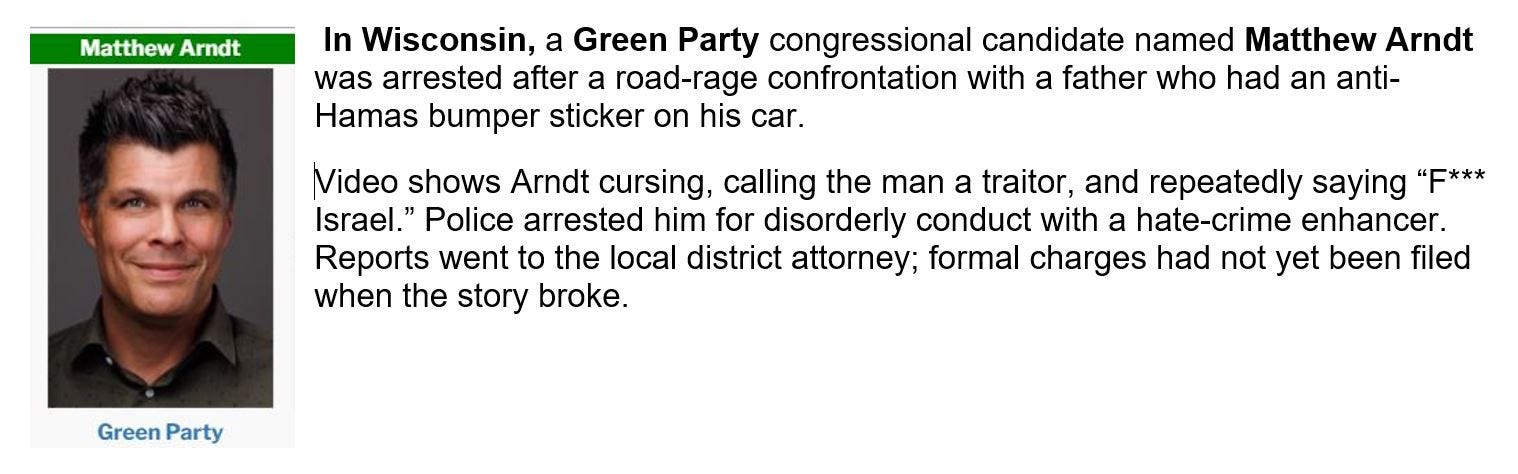

Both are real cases.
Both involve bias language tied to an underlying criminal act.
And both are being handled under state law, not federal law.
That last detail is easy to miss because the phrase “hate crime” gets thrown around so casually that the actual legal lines start to blur.
State Law, Federal Law, and the Fine Line
State Law
Most of the time when you hear that someone has been charged with a hate crime, it is a state charge. Nearly every state has its own statute or sentencing enhancer, which means the judge can give you a tougher punishment for a regular crime if you did it for a biased reason.
Wisconsin’s enhancer, for example, can raise the penalty on an ordinary crime like disorderly conduct if prosecutors prove the defendant selected the victim because of a belief about that person’s race, religion, national origin, or other listed category.
Connecticut has its own version. These laws are enforced by local police and state prosecutors. They have been on the books in most states since the 1980s and 1990s.
Federal Law
The main federal statute is the Matthew Shepard and James Byrd Jr. Hate Crimes Prevention Act, signed in October 2009 and codified at 18 U.S.C. § 249. It lets the Department of Justice prosecute willful causing of bodily injury (or certain attempts) when the motive is the victim’s actual or perceived race, color, religion, national origin, gender, sexual orientation, gender identity, or disability, and when other jurisdictional requirements are met.
Below is an excerpt from my July 5, 2015 https://drive.google.com/file/d/1dyg2Tlp3pkyn2KJR8ncy07jrUww5eBvw/view?usp=sharing
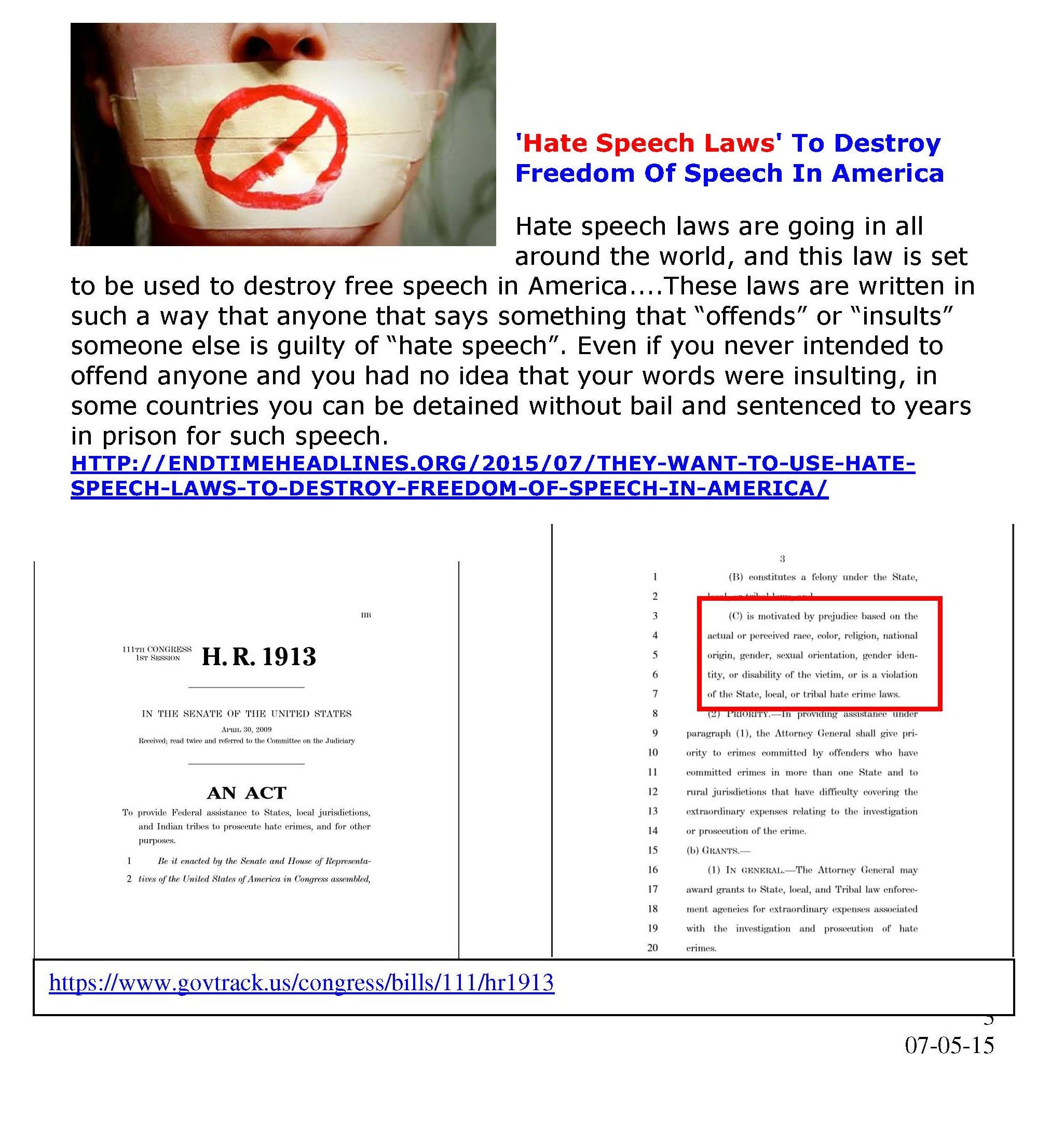
https://www.govtrack.us/congress/bills/111/hr1913
Federal prosecutors use it far less often. It functions more as a backstop—when a state cannot or will not prosecute, when the crime crosses state lines, or when additional resources are needed.
The line between the two is real but thin in practice. The same set of facts can sometimes support both a state charge and a federal charge.
Because the state and federal governments are separate sovereigns, dual prosecution is constitutionally allowed in limited circumstances. In everyday life, though, the state system handles the overwhelming majority of cases.
The Arndt and Torrington examples are typical: local police made the arrest, and the case stays in state court unless the U.S. Attorney’s Office later decides to step in.
People still use the term loosely. A heated argument, an offensive social-media post, or a protest chant is not automatically a hate crime.
Both federal and state laws generally require an underlying criminal act—assault, threat with a weapon, vandalism, disorderly conduct that crosses into criminal territory—plus proof of a bias motive.
Speech by itself is protected.
The First Amendment language in the federal statute is explicit on that point, and most state courts apply the same principle.
1948 Genocide Convention.
The Only Place the Phrase “Mental Harm” Appears in the Law

(excerpt from my article in 2016-Pg 1)
https://drive.google.com/file/d/1DAuu3qTlOjvNl2ivY1_a82wcWgOznlxz/view?usp=sharing
Source: On December 11, 1946, the United Nations General Assembly voted unanimously to declare genocide as a crime under international law.
http://www.un.org/documents/ga/res/1/ares1.htm 96(1) The Crime of Genocide-Pg 188-left column,bottom)
The phrase “mental harm” sometimes gets pulled into these conversations, but it does not come from the hate-crime statutes. It comes from the 1948 Genocide Convention.
In 2016 I wrote about the Genocide Convention and the long path the United States took before it became a full party.(excerpt from that article)
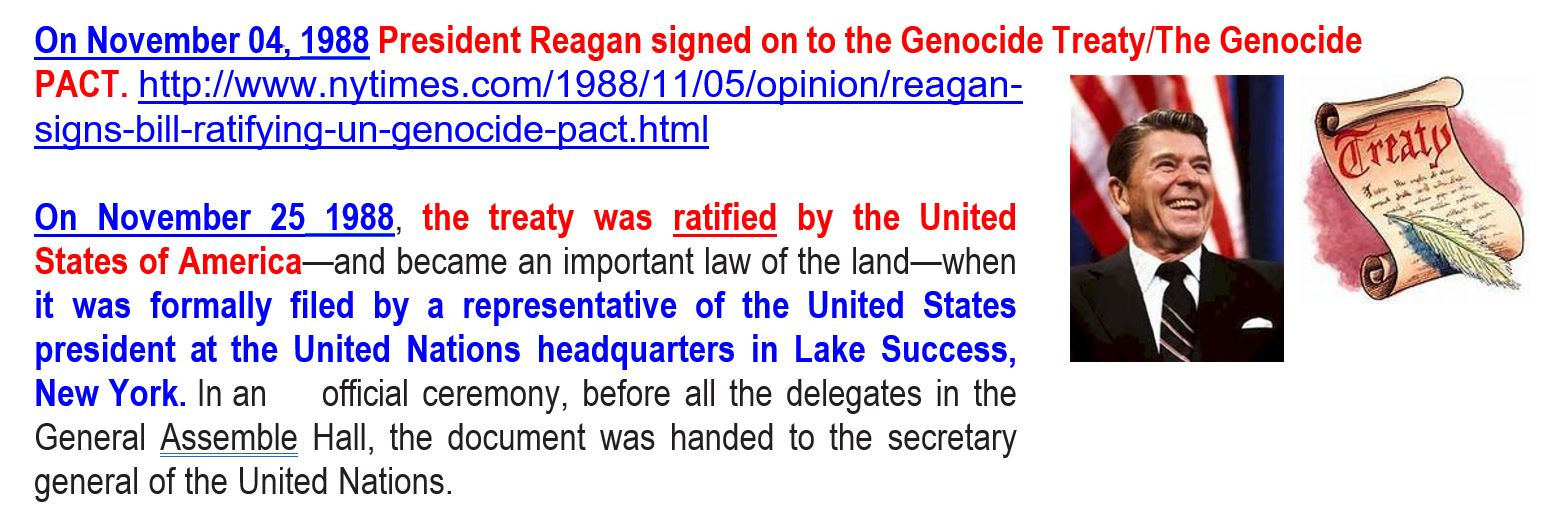
https://drive.google.com/file/d/1DAuu3qTlOjvNl2ivY1_a82wcWgOznlxz/view?usp=sharing (Pg 7)
The Convention was adopted by the UN General Assembly on December 9, 1948. The U.S. Senate gave its advice and consent on February 19, 1986.
On November 04, 1988 President Reagan signed on to the Genocide Treaty/The Genocide PACT. http://www.nytimes.com/1988/11/05/opinion/reagan-signs-bill-ratifying-un-genocide-pact.html
At the time I observed that the decades-long gap between the Convention’s adoption and U.S. ratification left open questions about how its language might later be read, including the reference in Article II to “causing serious bodily or mental harm to members of the group.”
That was my observation then.
The Convention still requires specific intent to destroy a national, ethnical, racial, or religious group as such; it is not the standard used in ordinary state or federal hate-crime statutes.
U.S. hate-crime laws—both the 2009 federal Act and typical state enhancers—do not use “mental harm” as a standalone trigger. They look for an underlying violent or criminal act plus a bias motive.
Feeling offended, distressed, or mentally harmed by words is not, by itself, a hate crime under either system.
The Practical Reality
In the two cases from this week, prosecutors will have to prove more than ugly language.
In Wisconsin they will have to show that the disorderly conduct was motivated by a protected characteristic under that state’s law.
In Connecticut they will have to connect the knife threat and the slur to the elements of their hate-crime statute. Those are ordinary criminal cases with an added bias element. They are not genocide cases, and they are not federal cases unless the Justice Department later chooses to make them so.
The distinction matters because the term “hate crime” has become shorthand for almost any expression of hostility.
The actual laws are much more narrow. They punish bias-motivated criminal acts. They leave pure speech alone. And, for the most part, they are enforced by the states that already had their own statutes long before the federal law was signed in 2009.
If the goal is clarity, the simplest way to say it is this:
When you hear “hate crime” in a local news report, it is almost always a state charge. The federal statute exists, but it is the exception, not the rule. And “mental harm,” standing by itself, is not the legal hook that turns either one into a crime.
Until next time….
Don’t forget to like, comment, restack and share at the bottom of this Article and under the Post tab as well

Share Higher Ground News With Others
Contact: highergroundnews@protonmail.com